MARKET SNAPSHOT | 2 OCT 2026
Friday, 2 October 2026
Latest meat market conditions
BEEF
The appetiser – what the market means for foodservice
Domestic beef supply should remain strong for the remainder of 2026, but export demand and elevated processing costs may continue to affect pricing and the availability of key cuts.
The mains
Meat and Livestock Australia (MLA) recently released their September 2026 Cattle Industry Projections, and they predict that Australian beef production will exceed a record 3 million tonnes in 2026, supported by higher slaughter numbers and carcase weights.
Improved seasonal conditions and long-term investment into genetics, farming and feedlot processes have made the Australian herd more resilient, allowing producers to maintain elevated turn-off without the same level of herd reduction seen in previous years. This should support sustained beef supply for the domestic foodservice market in the medium-long term, before the next herd rebuild begins.
According to Stuart Bull, MLA’s Market Information Manager, “As cattle availability gradually tightens, slaughter is expected to ease, but higher carcase weights and continued productivity gains should help maintain strong beef production.”
Average carcase weights are forecast to reach 313kg per head in 2026, and are expected to keep getting heavier. For foodservice operators, larger cattle may result in steaks that are longer, but have been cut thinner to achieve established potion weights.
Supply patterns also reflect the weather divide between northern and southern Australia over the past 2-3 years. Several favourable seasons have supported herd productivity in the north, while dry conditions previously increased female turn-off across parts of southern Australia (see below graph).
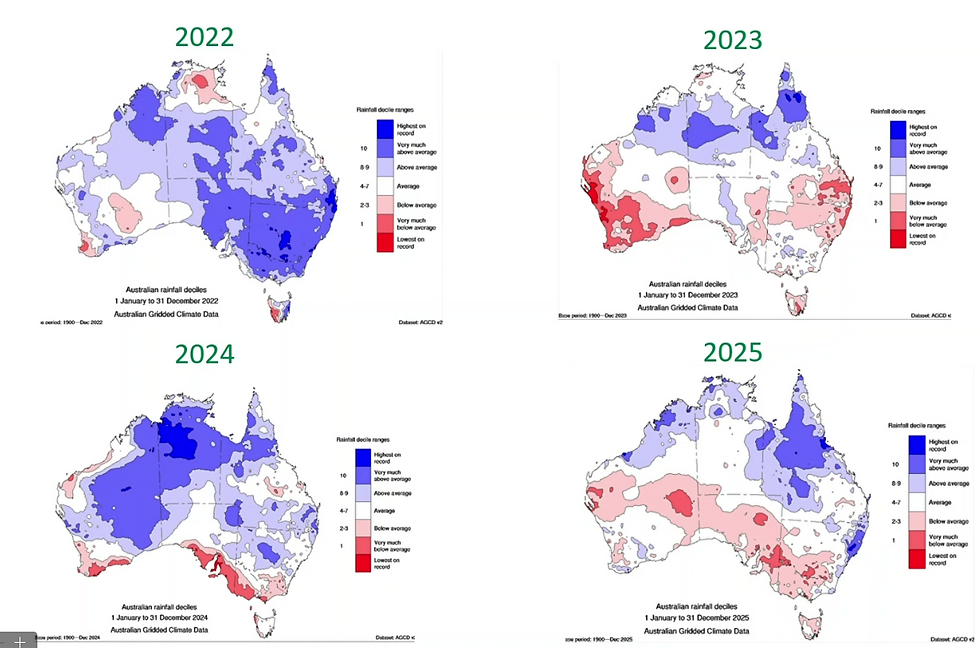
Although conditions have improved across several regions in southern Australia during 2026, this divide continues to influence cattle availability and where it is being sourced.
On the global front, 2026 is shaping up to be another record year with Australian exports forecast to reach approximately 2.4 million tonnes, supported by strong global demand and tight beef supplier in several major producing countries, such as the USA.
Export volumes to China and South Korea are expected to increase at the end of 2026 ahead of annual quota resets and will remain elevated, particularly during the first four to six months of 2027.
Read more in MLA’s September 2026 Australian Cattle Industry Projections
LOOKING AHEAD
Elevated diesel prices increase operating costs for cattle producers through machinery use, water and feed distribution, and livestock transport, while also adding to freight costs across the broader supply chain. Sydney’s current average diesel price at 285.1 cents per litre. Prices have risen 108.8 cents per litre since 30 June.
Read more in MLA’s September 2026 Australian Cattle Industry Projections
Read more in NRMA’s Weekly Fuel Report
Disclaimer: The information contained in this blog is provided for general informational purposes only. While Andrews Meat Industries has exercised reasonable care, skill and diligence in its preparation, many factors — including environmental and seasonal conditions — can impact its accuracy and currency. For tailored advice relating to your business, please contact your Andrews Meat Industries sales representative.